Taking advantage of the time when 12 – year – olds were preparing to finish high school and enter college entrance exams with a series of important administrative procedures, scammers deployed sophisticated tricks to appropriate parents’ property. This is a sensitive period when students have to complete applications for tests, admissions, confirm personal information, and perform a variety of online tasks, which can allow the bad guys to attack the anxious family.
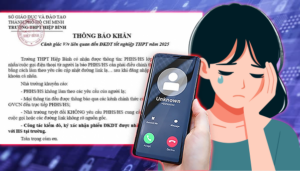
According to reports from many localities, the subjects often text or call directly to parents, informing them that their children’s application for the exam is flawed, missing information, or in danger of being invalid. They emphasize “urgent” status, requiring amendments to be made on the same day, otherwise students may be affected by their right to take exams or apply for admission. This approach has left many parents confused, unable to verify the information in time.
To create trust, the perpetrator continued to send the victim a “cath police number” or education support officer to guide the update of the record. When a parent calls this number, the other end of the line is a fake law enforcement agent, using a serious tone and understanding administrative procedures to convince the victim to follow instructions. They then send the link with the reason “access to the information regulation system” to the students.
When the victim accesses the link and performs on-demand operations such as entering personal information, authenticating by face scanning, or granting authorization to the app, their bank account is immediately usurped. In Hiep Binh High School (Thu Duc City, HCMC), it has been recorded that many parents have been tricked with amounts in the tens of millions of dong. Not only HCMC, localities such as Hanoi, Long An, and Binh Duong have also found many similar incidents with almost the same tricks.
According to cybersecurity experts, the reason many parents are more likely to fall for the trap is that the bad guy has collected a lot of personal information related to the student and family, such as name, school, class, and even the time of the exam. Amid the approaching exam season, the psychological anxiety for their child’s academic future makes it easier for parents to lose their guard and trust in calls labeled “official agencies”.
To prevent similar scams, citizens should raise their guard, absolutely not providing personal information, banking information, or making any requests from strangers via phone, text message, or social media. Don’t click on unidentified links, scan faces, or install apps as directed from calls claiming to be authorities. When receiving information related to the examination dossiers, the parents should contact directly the school, head teachers or official education agencies for verification, and absolutely not transfer money when the request origin has not been clarified.