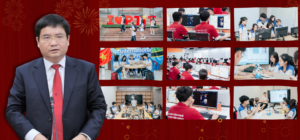
GDVN – I believe that the State’s macro policies after Resolution No. 57 will also encourage teachers, scientists and students.
In a speech at the National Conference on Breakthroughs in Science, Technology, Innovation, and Digital Transformation (January 13, 2025), General Secretary To Lam emphasized: “With the goal of becoming a modern industrial country by 2030 and a developed, high – income country in 2045, we must consider science, technology, innovation, and digital transformation as key drivers. This is the “golden key,” vital to overcome middle – income trap and the risk of lagging behind, and to realize our nation’s desire for power and prosperity. ”
According to To Lam General Secretary, the Politburo’s Resolution No. 57-NQ/TW dated December 22,2024 on breakthroughs in science and technology development, innovation and national digital transformation has indicated strategic orientations and was agreed upon by a large number of cadres, Party members, scientists, and business communities at home and abroad, considering it as a “decision number 10” in the field of science and tech. This support demonstrates the nation’s fierce desire for development and determination to rise. [1]
On the occasion of the 2025 New Year’s Eve, Vietnam Education Web Journal corresponded with Associate Professor and Dr. Dang Hoai Bac, Director of the Post and Telecommunications Technology Academy, about the opportunities and challenges of higher education institutions (in general) and schools (in particular) in the quest for science and technology development, innovation and national digital transformation.

Reporter: The Politburo has issued Resolution 57-NQ/TW on breakthroughs in science and technology development, innovation, creativity, and national digital transformation. What do you have to say about this?
Associate Professor, Dr. Dang Hoai Bac: On December 22,2024, the Politburo issued Resolution No. 57-NQ/TW on breakthroughs in science and technology development, innovation and national digital transformation. This is an important document that demonstrates the Party’s strategic vision of promoting key sectors to meet the requirements of socio – economic development and international integration in the context of the 4.0 industrial revolution.
Resolution No. 57 marked a strong step forward in placing science, technology, innovation and digital transformation as a driving force for economic and social development. The clear identification of the role of these factors has created a basis for long-term strategic direction, helping Vietnam adapt quickly to global trends, improve its internal capacity and move toward a knowledge-based economy.
The Resolution emphasized science, technology and innovation as the foundation, digital transformation as the motive force, helping to comprehensively promote economic, cultural, social and defense sectors. This is the right direction, in accordance with the current requirements. The document focused on developing high – quality human resources, building modern digital infrastructure, and investing in priority areas such as artificial intelligence, blockchain, big data, and the Internet of Things.
This creates conditions for Vietnam to optimize its domestic resources rather than relying solely on imported technologies. The resolution not only sets specific goals for each stage but also outlines a long-term vision, towards building a comprehensive innovation ecosystem. Targets such as institutional perfection, policy reform, and promotion of international cooperation are explicitly mentioned, indicating synchronicity in the deployment plan.
The special point of Resolution No. 57 is to emphasize the roles of enterprises, universities, research institutes and communities in implementing the innovation and digital transformation strategy. This creates widespread diffusion and connectivity, which ensures sustainability.
Reporter: How do you assess the opportunities, challenges, advantages, and difficulties of Vietnam’s schools and higher education institutions (in general) in the field of human resources training in the current context?
Associate Professor, Dr. Dang Hoai Bac: Digital transformation is a global trend, creating a huge demand for human resources in areas such as artificial intelligence (AI), big data, blockchain, and cybersecurity […]. Vietnam has a great opportunity to participate deeply in the global value chain through high – quality human resource training. The central government and the Government have promulgated many policies such as the national digital transformation program, Resolution No. 57-NQ/TW and resolutions defining scientific, technological and educational development orientations in order to promote training of digital technology human resources.
Vietnam has a high proportion of young people, with a willingness to access technology and a desire to rise, which is a potential resource for training and developing digital technology human resources. These are favorable conditions for higher education institutions to make strong investment in scientific research and education and training activities in the digital technology fields.
Vietnam has made great progress in building telecommunications networks, digital infrastructure and technological platforms, facilitating the wide-scale implementation of training. Vietnam’s position in the international arena and stability in political, economic and social situation are also decisive factors as major tech conglomerates such as Google, Microsoft, AWS, NVIDIA, Meta… invest in and expand markets as well as implement cooperation programs on training and provision of free documents and tools to improve the capacity of digital technology human resources.
Opportunities are great, but higher education institutions are also facing pressures of a shortage of high-quality faculty. The number of experts and trainers capable of providing intensive training in areas such as artificial intelligence, big data, blockchain, etc. is limited. Attracting foreign experts is difficult. The implementation of digital technology training requires large investments in technical infrastructure, software, and equipment, while many training institutions still do not have the financial capacity to meet this demand.
Interviewer: From the practical difficulties and obstacles, what solutions do you think should be focused on in the next phase?
Associate Professor, Dr. Dang Hoai Bac: In order to bring into full play the favorable conditions brought about by the occasion and overcome the above-said remaining problems, the Post and Telecommunications Technology Academy as well as other higher education institutions are formulating mechanisms and policies to attract specialists and professors from foreign universities and enterprises, the community of overseas students and research students to return home to make contributions.
However, the lack of efficiency requires strong support from the State with specific policies. Investment in research facilities also requires support from the State and the business community; establish funds for training digital technology human resources for students and educational institutions and adopt mechanisms to reduce or grant scholarships for key technologies.
Reporter: How does the ICT workforce training of the Academy contribute to the achievement of the objectives set forth in Resolution No. 57-NQ/TW? Moreover, what are the next stages of realizing these goals?
Associate Professor, Dr. Dang Hoai Bac: Since 2020, the Academy has set the strategic objective of building the Academy as a model of National digital transformation in the field of education and training. In the past 5 years, the Academy has opened many digital technology training disciplines/programs such as IoT Internet of Things Technology, Control and Automation Engineering, Data Engineering, etc., among which, many disciplines are licensed for training in Vietnam for the first time, such as the IoT, Financial Technology, Game Design and Development, etc..
The specialties of Artificial Intelligence, Robotics, Semiconductor chip design have also been implemented by the Academy for many years and are highly regarded by society.
Research projects of the Academy’s teachers, scientists and students have also been invested and funded by foreign enterprises such as Samsung, Naver, etc..
The Academy is also a small number of universities that are now housed in simulation labs and research labs in IoT, AI, etc. by major corporations at home and abroad, greatly contributing to improving the quality of training and research facilities of the Academy.
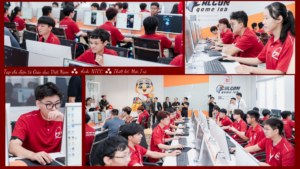
Opening ceremony of the Game Practice Room at the Posts and Telecommunications Technology Academy in 2024.
Reporter: In reference to the 2024 milestones in the Academy’s training in science and technology development, innovation and digital transformation, what can you review?
Associate Professor, Dr. Dang Hoai Bac: As the only higher education institution of the Ministry of Information and Communications, receiving close attention, support and direction from the Ministry’s leadership, in 2024, the Academy will continue to promote digital transformation results and expand training disciplines, improve research potential and training quality.
The Academy has inaugurated the Ngoc Axe Training Facility (Nam Tu Liem District, Hanoi); established the country’s first artificial intelligence department; and implemented the country’s first overseas training program for Vietnamese on the foundation of the Academy’s “digital university.”
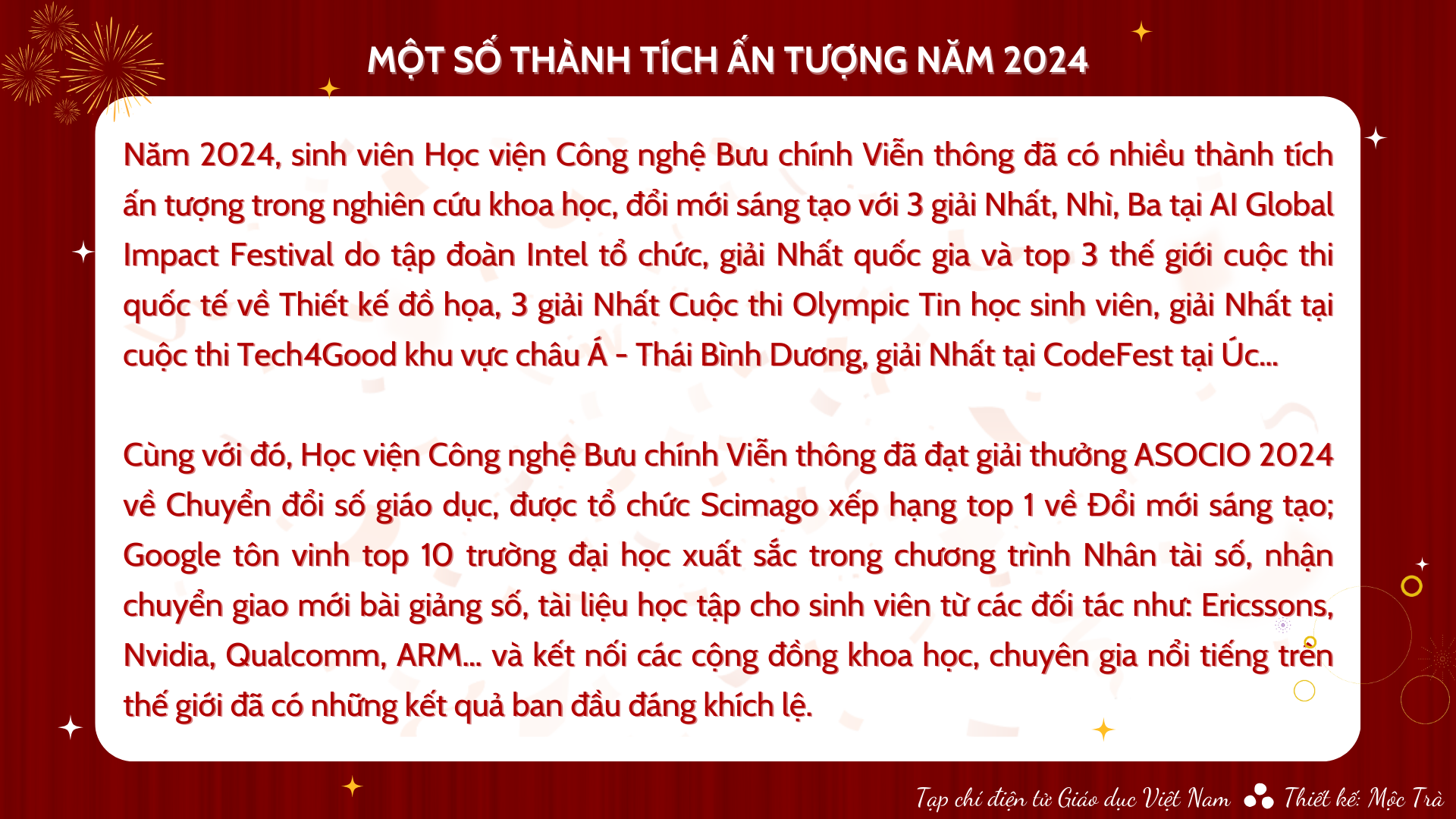
In addition, the Academy has also successfully enrolled across all training systems, from undergraduate to postgraduate with over 30 disciplines/training programs (with 5 new disciplines/programs), up 121.16 percent from 2023. The Academy has completed the accreditation of 100% of training programs at university level and implemented international accreditation for 7 training programs.
Reporter: As the first university institution to open its own artificial intelligence department in Vietnam, what does this mean and what advantages has it brought to the university, sir?
Associate Professor, Dr. Dang Hoai Bac: Aiming to become a high-quality training center for artificial intelligence, in August 2024, the Post and Telecommunications Technology Academy established the Department of Artificial Intelligence and the first university in the country to have a department dedicated to AI, focusing on teaching, research and application of AI in various fields, from telecommunications and information technology to healthcare, education and manufacturing, etc.
Resolution No. 57-NQ/TW identifies Vietnam as one of the top three Southeast Asian countries in artificial intelligence research and development, which serves as a motive force for the Academy to increase investment in resources for training and scientific research in this field. At the same time, it is a favorable condition for the Academy to have access to and expand its cooperation with major firms around the world, carrying out research projects on Artificial Intelligence.
I believe that the State’s macro policies after Resolution No. 57-NQ/TW will also encourage educators, scientists and students.
In the first year after the Academy’s Artificial Intelligence Department was established, students’ research products in the field of Artificial Intelligence won numerous prizes selected and honored by businesses. In particular, it won the National First Prize in the Tech4Good Competition by Huawei (China) and will compete in the Global Round in March 2025; the Vietnam First Prize of the National Category in the Intel Corporation’s AI Global Impact Festival (USA), etc..
Reporter: 2025 is a milestone year identified in the development strategy of the Posts and Telecommunications Technology Academy. Can you tell us what your school expects in 2025 and beyond?
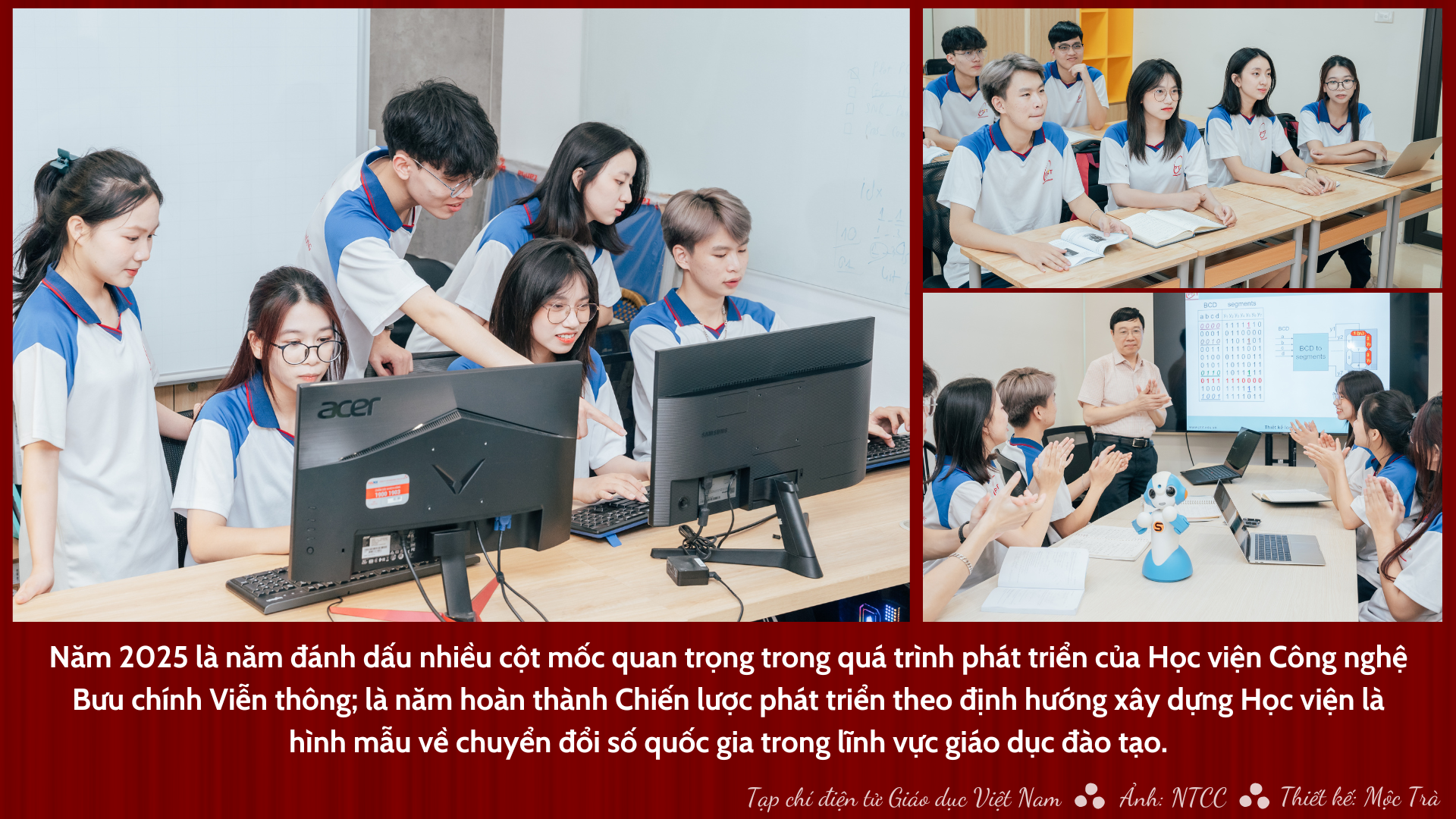
Associate Professor, Dr. Dang Hoai Bac: 2025 is the year that marks many milestones in the development of the Academy: The year of completion of the Strategy for development towards establishing the Academy as a national digital transformation model in education and training.
In 2025, the Academy will continue to fulfill the strategic targets that have been issued. Specifically:
One is, To continue opening new disciplines, especially interdisciplinary ones with digital technology as a foundation; to increase training scale and well fulfill enrolment, training, scientific research and international cooperation targets. In 2025, the Academy is expected to increase its enrollment quota and open 5 new disciplines and training programs including: Artificial Intelligence, Semiconductor Microchip Technology, Logistics, High – Quality Multimedia Communications, High Quality Information Security.
Number two, To further invest in and develop resources: To step up the completion of investment projects on building physical foundations and equipment; to increase investment in intensive development of digital curricula, lectures and learning materials; to further develop human resources.
Number three, Promote application of digitalization in every field of operation and management of each unit of the Academy and the entire Academy; build a ” digital university ” and apply technology to teaching in a more comprehensive and strong manner. In 2025, the Academy will enroll the first course of distance learning international education association program on the “Virtual Convergence University” platform between the Academy and Chung-Ang University (South Korea). It is an advanced form of university and is a new trend for not only Vietnamese students but also Vietnamese abroad.
Number four is, Intensify the development of innovation and entrepreneurship among students of the Academy, especially in the field of digital technology; establish startup support funds for students and provide incentive policies to encourage entrepreneurship.
Reporter: In lieu of a closing statement, how would you describe the upcoming missions of higher education institutions (in general) and the Academy (in particular) to contribute to the resolution? No. 57-NQ/TW Getting into life effectively?
Associate Professor, Dr. Dang Hoai Bac: When implementing Resolution No. 57-NQ/TW under the direct direction of General Secretary To Lam with the burning desire to put our country into a new era of greatness and prosperity, the mission of the higher education institutions, including the Post and Telecommunications Technology Academy, is very great: To train high-quality human resources on an international level while organizing scientific research and innovation activities to catch up with and master the world’s most advanced technologies.
Higher education institutions must build a model of cooperation and sharing, make the best use of each institution’s resources, promote transferability of various forms of training, focusing on “reskilling” training models. (the re-training of workers’ skills so that they can take on new jobs), “upskilling” (learning new and advanced skills), To certify skills according to international standards, serve lifelong learning needs with accessible training methods based on the digital platform under the idea of “quasi-people learning digital services”.
We believe that, with the alliance of universities, especially technology universities, with an expanded scope, not closed in the framework of each university, cooperating with the leading universities in the world, Vietnam’s knowledge and brain matter will not only make our country flourishing in the new era, but also spread Vietnam s knowledge globally, making a worthy contribution to the development of mankind.
Reporter: Thank you so much for sharing!
 Address: 10th Floor, Building A2, Posts and Telecommunications Technology Academy,
Km10, Nguyen Trai Road, Q. Ha Dong, Hanoi
 Website: https://infosec.ptit.edu.vn
 Email: attt@ptit.edu.vn
 Fanpage: facebook.com/KhoaATTT.PTIT