Vietnam’s digital asset market is in one of the most exciting and paradoxical periods in the country’s history of digital economic development.
Vietnam is consistently among the world’s leading countries in the percentage of people owning crypto-assets, with an estimated number of up to 17 million. This suggests a great acceptance and search for investment opportunities in society. It is this excitement that is taking place in a lawless playing field, creating a legal vacuum, turning the market into fertile ground for sophisticated deceptive activities, causing serious social consequences and the loss of large amounts of capital abroad.

According to leading experts in blockchain and digital assets, the picture of this market in Vietnam has three core aspects:
First, it’s the size and severity of the current market situation, where unlicensed exchanges and deceptive projects are sprouting up.
Second, it’s the dissection of one of the most common forms of fraud — the “Rug Pull” — to see the “fearful power” of technology in the wrong hands.
Finally, it is the Government’s landmark efforts to create a national legal corridor and blockchain infrastructure, which show the opportunities and challenges in the journey to put Vietnam’s digital asset market on a transparent and sustainable development trajectory.
Exciting but also risky
The current state of Vietnam’s digital asset market is described by experts in thought – provoking numbers.
“As of 2024, the number of Vietnamese people owning crypto assets is 17 million, ranking 7th globally,” Phan Duc Trung, chairman of the Vietnam Blockchain and Digital Property Association (VBA) said at a symposium on the Legal Framework and identification of the risk of cryptocurrency fraud.
The number of Vietnamese who own crypto-assets (in 2024) has dropped by around 4 million compared to 203 when up to 21 million Vietnamese own the digital assets and ranks third in the world, according to data from the VBA.
Statistics also show that over 85 percent of freelance workers (freelancers) in Vietnam are owners of crypto assets, ranking # 1 globally.
These figures not only reflect an investment trend, but also show a shift in the financial behavior of a large segment of the population, especially young people and those working in the digital economy.
Yet this excitement is accompanied by a sad reality: Almost all trading is outside the state’s control and does not bring direct economic benefits to the nation.
Phan Duc Trung pointed out candidly that the biggest and most popular exchanges with Vietnamese users such as Binance, OKX, BingX are all foreign entities, without licenses, without servers, and apparently without paying a single tax in Vietnam.
Meanwhile, Vietnamese tech startups, while creating innovative products, are paying foreign service infrastructure providers, leaving much of their earnings outside the borders.
The result of this unmanaged environment is the explosion of fraudulent projects and crashes that cause heavy losses to investors.
Trung has cited “heartbreaking” examples of “made in Vietnam” projects that were once celebrated but ended up leaving “social consequences.”
Many “Vietnam – branded” projects were heavily promoted, calling for thousands of people to invest, but then collapsed in a short period, costing investors tens of millions of dollars.
In some cases, as reflected by the community, the founders quickly got rich by withdrawing early funds or appropriating assets, while the investors lost their money without being thoroughly handled legally.
These stories reveal a devastating reality: in the absence of a legal framework and transparent oversight mechanisms, digital asset projects can become “grey zones” that cost many citizens dearly for gullibility. Those who trust in their money, face the risk of losing it.
“Rug Pull” and Technology Abuse
To understand why it is so easy for investors to fall into the trap, we need to look deeply at how scams are done.
“Rug Pull” is described by Pham Gia Khanh, Technology Director of NippyLabs JSC, as the most typical form of scam on the blockchain, occurring every day with tens of thousands of new tokens being born.
Most frightening of all, creating such a deception is unimaginably easy and fast.
They use free and publicly available tools, along with widely shared, open-source footage. After “printing” millions of tokens at zero cost, the scammer takes the next step: Create a liquidity pool.
Liquidation pools are where trading occurs. The scammer will remove a very small portion of the newly created token (e. g., 100,000 out of 1 million tokens) and match it with a real amount of assets (such as the USDT, which is equivalent to the U.S.dollar) to create an initial exchange rate. Most of the remaining tokens (900,000) remain in their wallets.
The key stages in determining the success of a scam are marketing and communication. They’ll tell compelling stories, hire KOLs to promote, run ads on X (Twitter), Facebook to get attention and create a fear of missing out (FOMO) mentality in the community.
Many investors, seeing a new project as having the potential to skyrocket, will pour real money into it. As they buy, the amount of fraudulent tokens in the pool decreases and the amount (USDT) of real money increases.
Once the amount of real money in the pool is large enough for their purpose, the scammer takes a decisive blow: They use all of their massive token holdings (900,000 tokens) to sell out the pool, withdrawing all of the real money back to their personal wallets.
This is known as “pulling the rug”. Instantly, the value of the fraudulent token fell to almost zero and all investors were left in the hands of worthless digital assets that could not be sold.
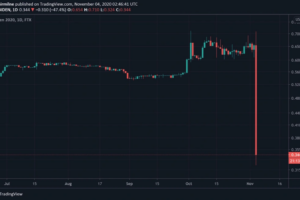
The chart illustrates the “catheter pulling” phenomenon, where the scammer sells off the entire token, causing the price to plunge within minutes.
The entire process, from creating the token to successfully defrauding, can take only a few minutes. It often takes place on decentralized exchange (DEX) platforms such as Uniswap, which do not require identity verification (KYC) and are not subject to the control of any institution, making them an ideal “game” for criminals.
The legal vacuum that feeds crime
The perpetration of deceptive practices stems deeply from the legal vacuum. When a legal environment is unclear, we can not expect issues to be regulated, Phan Duc Trung stressed.
For many years, from 2017 to 2024, although the state has issued many documents related to innovative startups, blockchain or digital currencies, the enforcement effectiveness has been very limited.
The evidence is that there are only two typical cases in the country that have been brought to trial: a civil case involving tax evasion from Bitcoin mining (which ultimately was dismissed because Bitcoin was not considered taxable property) and a criminal case involving Bitcoin robbery.
This suggests that the existing legal system does not have enough tools and definitions to handle these new types of crimes.
The absence of a clear legal framework creates a grey zone, where illegal capital – raising activities have the opportunity to justify that “the law has not been banned”.
It also disconcerts authorities and even within large businesses such as banks, which still exists a “brain-infiltrating” preconception that blockchain or cryptocurrency is bad, risky, and should be avoided.
It is this fear that has slowed access and policy – making, while the world has been years ahead of Vietnam.
Two strategic grips
Given the pressing situation, the Vietnamese government has recently made dramatic changes, demonstrating a clear political determination to manage and develop the digital asset market.
Vietnam’s approach can be seen as a synchronous “two – pincer” strategy: One is to build a legal framework for managing transactions, the other is to develop a national blockchain infrastructure to harness the technology’s core value.
The First pincer: Managing and Regulating Markets
The key turning point came in 2024 when the Government issued Decision 1236 on promulgating the national strategy on application and development of blockchain technologies by 2015, with a vision toward 2030; and included blockchain technology in the list of 11 strategic technologies prioritized for development.
Most notably, the National Assembly passed the Law on Digital Technology Industry, which will take effect January 2026, in which digital assets will be recognized as an asset category for the first time.
This is the cornerstone, as once recognized as property, it is subject to the civil and criminal legal system, which allows for the handling of disputes, inheritance, and especially taxation.
Concretizing this strategy is a scheme to build a pilot digital asset trading floor, which will be chaired by the Ministry of Finance, with around 5 licensed floors expected.
The primary goal of the pilot platform is not only to trade but also to be a channel to raise capital for the economy, especially large infrastructure projects.
However, the project also faces many challenges. The proposed tax of 0.1% on the transaction is said to be “very high” and may reduce competitiveness, pushing users into off – the – floor or black market transactions.
Regulations such as requiring Vietnamese to return assets from foreign exchanges within six months are also controversial, as domestic exchanges may not list all the types of assets they hold.
The Second Pincer: Building a National Blockchain Infrastructure (VBSN)
In parallel with managing the “root” of its trading operations, Vietnam is taking a broader view of mastering the “core” – technology.
Vietnam now has several companies that have pioneered the Vietnam Blockchain Multicasting Service Network (VBSN). This is an attempt to separate blockchain technology from the preconceptions of “virtual money, fraud.”
Dr. Do Van Tich, Director of Blockchain Solutions and Architecture, CP 1Matrix, explained that the VBSN is designed to be a national strategic infrastructure, similar to China’s BSN or European EBSI.
The goal is to build a “Make in Vietnam” ecosystem, where Vietnamese data is located on data centers in Vietnam, operated by Vietnamese businesses.
VBSN does not create a single blockchain, but develops multiple different layers of blockchain, each with its own specifications to cater to diverse needs from public services to private businesses.
Potential applications of this infrastructure are enormous: From assisting VNeID digital identifiers, traceability of agricultural goods, authentication of e-invoices, to authentication of diplomas implemented by the Government Cipher Board.
For businesses, this technology can solve the data-sharing problem while protecting the user’s identity under the law or digitizing illiquid assets. This is an attempt to show that Vietnamese people can not only master the world’s core technology but also apply it to solve the country’s practical problems.
Vietnam is at a historic crossroads in the digital asset market and is taking drastic action to regain investor transparency and safety; this has been likened to a multi-front “war.”
It requires a vigor in perfecting the legal framework, wisdom in designing competitive policies, and a long – term vision of building a technology infrastructure of autonomy.
The “two – pincer” strategy – both managing the transaction market and building a national blockchain infrastructure – is a sound and comprehensive approach that shows a maturity in policy thinking: Not prohibiting extremes, nor letting go of irresponsibility, but actively managing risks and tapping potential.
However, the journey ahead still has many pitfalls. Perhaps the biggest challenge lies not only in enacting laws, but also in changing perceptions and equipping society.
Until the legal framework is finalized, the most important thing remains the sanity of each investor. With a single unchecked click, assets that have been accumulating for years can disappear in seconds. The right understanding, the right investment, and the right foundation of prestige are the only shield that can protect people from the volatile digital asset world.
) Q.T.T-